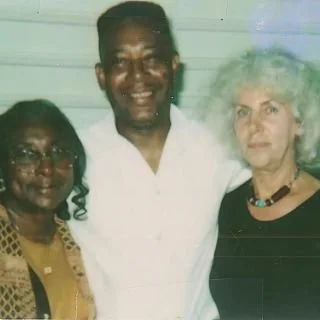
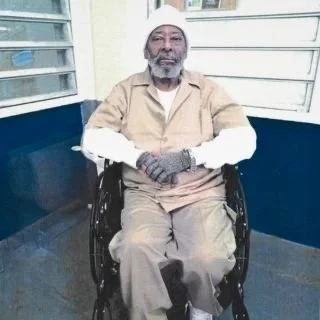
About Mr. Charles “Sonny” Burton
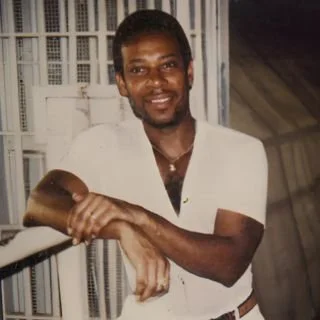
Early Life: A Childhood Defined by Hardship
Sonny’s story begins with a resilience born of necessity. At a young age, Sonny was sent to live with his father, a transition that would introduce him to a cycle of severe physical abuse. Court records and family testimony paint a harrowing picture of his upbringing; his stepfather recounted witnessing Sonny being brutally beaten for something as simple as calling his stepdad "Dad." Despite the heartbreak of his early years, Sonny maintained a deep connection to his family, who have stood by him for decades, remembering him not for his mistakes, but for his character.

The Weight of Loss
Life's hardships did not end when Sonny entered the system. While incarcerated, Sonny suffered an unimaginable personal tragedy: his wife was brutally murdered. In a painful irony of the legal system, the individual responsible for her death has since been paroled and returned to society. Sonny, meanwhile, remains on death row for a crime in which he was not the shooter, carrying the weight of his own grief while facing a sentence far harsher than those who committed more violent acts.
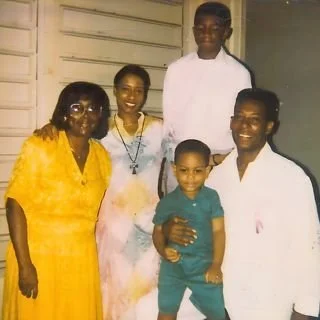
A Transformation Through Faith
In 1972, Sonny began a spiritual journey that would define the rest of his life. He converted to Islam and has remained a devout, practicing Muslim for over 50 years. His faith is not merely a private comfort; it is the lens through which he views the world.
Throughout his time in the Alabama Department of Corrections, Sonny has become a man of peace and mentorship. He is committed to guiding those he connects with, using his own lived experience to help younger men stay off the path he once walked. His advocacy for religious equality, including his fight to have an Imam present for spiritual comfort, has made him a voice for human dignity within the prison walls.
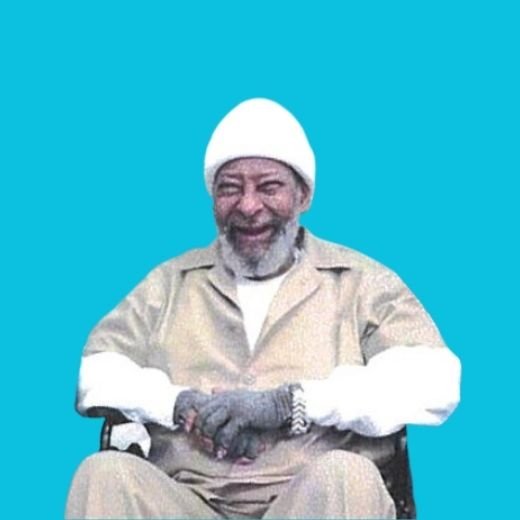
Sonny Today: A Call for Mercy
Now 75 years old, Sonny’s health is rapidly deteriorating; he is now a wheelchair-bound "fall risk" suffering from chronic physical pain. Yet he remains a light, as a father, a brother, and a friend to those he touches.
The State of Alabama has itself acknowledged the injustice at the center of this case. In court filings, the State has admitted that allowing Sonny to remain under a sentence of death while the actual shooter was re-sentenced to life without parole creates an outcome that is “arguably unjust.”
That recognition is now shared by many who were closest to the original decision. Six of the eight living jurors who voted
to sentence Sonny to death now support commuting his sentence. Three have formally requested clemency, explaining that they would not have voted for death had they known the shooter would not face the same punishment.
Most notably, the victim’s daughter has also publicly called for Sonny’s death sentence to be commuted to life without the possibility of parole.
Governors in other states, including Texas Governors Greg Abbott and Rick Perry, Arkansas Governor Asa Hutchinson, Virginia Governor Terry McAuliffe, and most recently Oklahoma Governor Kevin Stitt, have granted clemency in similarly rare and disproportionate cases where a less culpable defendant faced execution.
We are asking Governor Kay Ivey to do the same here: to grant a commutation, and to ensure that an execution the State of Alabama itself has recognized as “arguably unjust” does not go forward.
“Charles Burton never killed anyone, nor did he arrange for anyone to die, a fact that even the state acknowledges.”
“He is not the ‘worst of the worst,’ and nothing about his case merits a punishment harsher than the one given to the person who committed the killing.”
“If life in prison is considered justice for the shooter, it should be enough for my brother.”